

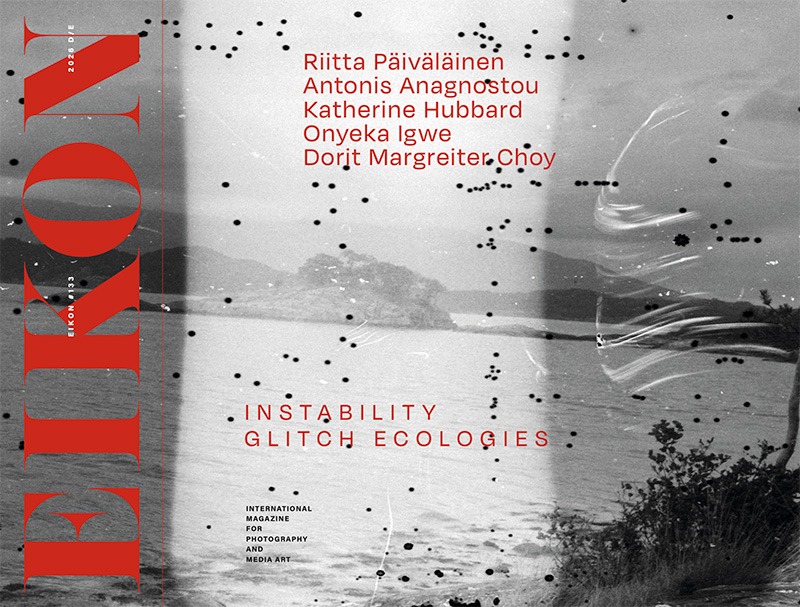
2026/07
EIKON #133 | INSTABILITY | GLITCH ECOLOGIES
Artists: Antonis Anagnostou | Gertrud Fischbachr | Katherine Hubbard | Onyeka Igwe | Katharina Kiening | Dorit Margreiter Choy | Riitta Päiväläinen
Authors: Thomas Ballhausen | Daniel Blochwitz | Patrizia Feichter | Wolfgang Giegler | Esther Heltschl | Eero Karjalainen | Elena Peytchinska | Gudrun Zacharias
Languages | Deutsch / Englisch
Format | 280 x 210 mm
ISBN | 978-3-904083-27-0
112 Seiten
Price: € 18,00 (inkl. 10% USt)
→ Order
In a present-day world saturated with images, where increasingly photo-like images based on machine learning are circulating, the ability to interpret them critically is becoming a key skill: it requires media-reflective knowledge, an understanding of the techniques involved, and the realisation that the photographic is never objective, nor has it ever been. Images are always constructions – and must be questioned.
Franziska Kunze | Pinakothek der Moderne, München
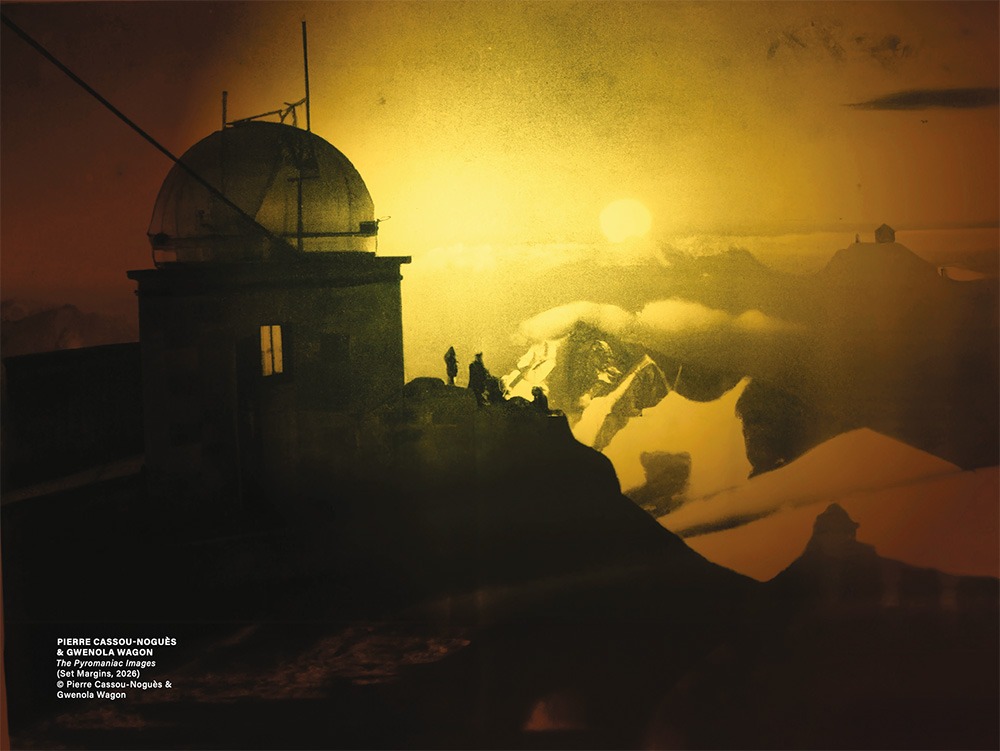
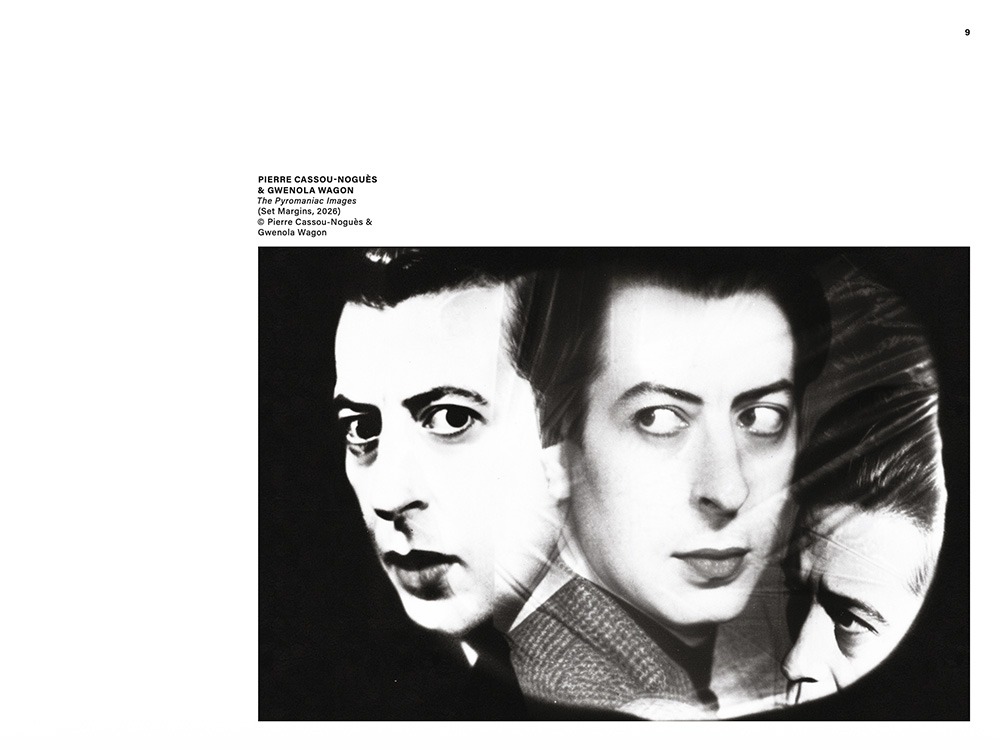
![ADAM BROOMBERG & OLIVER CHANARIN, The Press Conference, June 9, 2008. photo: Bayerische Staatsgemäldesammlungen, Margarita Platis © VG Bild-Kunst, Bonn 2023. WILLIAM HENRY FOX TALBOT, Untitled [The Oriel Window, South Gallery, Lacock Abbey]](https://new.eikon.at/wp-content/uploads/2026/06/133_glitch.jpg)
CONTENT
FOCUS | INSTABILITY – GLITCH ECOLOGIES
THE GLITCH TO COME – THE FUTURE OF THE ERROR – Elena Peytchinska
IN THE RABBIT HOLE OF IMAGE DISRUPTION. ON GLITCHES, NOISE AND BLURRYNESS – Patrizia Feichter in conversation with Franziska Kunze
UNSTABLE SYSTEMS: ON GERTRUD FISCHBACHER AND KATHARINA KIENING – Thomas Ballhausen
PORTFOLIO
RIITTA PÄIVÄLÄINEN – Gudrun Zacharias
ANTONIS ANAGNOSTOU – Gudrun Zacharias
EXHIBITIONS
SUMMER’S COMING – A NEW MEDIA ART FESTIVAL IN LOWER AUSTRIA – Wolfgang Giegler
ANOTHER PARADISE IS POSSIBLE. – Daniel Blochwitz
ON REMEMBERING AND DISAPPEARING – KATHERINE HUBBARD AND ONYEKA IGWE AT THE VIENNA SECESSION – Gudrun Zacharias
ENCOUNTERS BETWEEN METAPHOR AND INVOCATION – Eero Karjalainen
BEYOND BLACK-AND-WHITE THINKING: THE BRUNO DECHARME PHOTO BRUT COLLECTION AT FOTO ARSENAL WIEN – Patrizia Feichter
REFLECTION IN THE SPATIAL LABYRINTH – Esther Heltschl
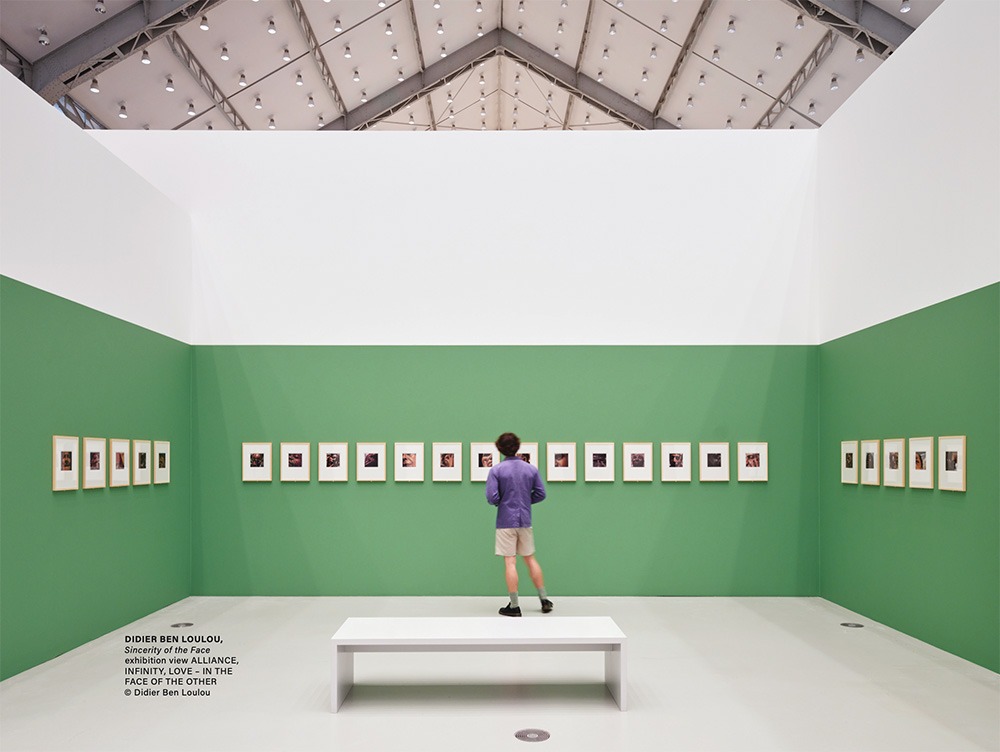
HEALING PHOTOGRAPHY? PHOTOGRAPHY AND THE OTHER AT HAMBURG PHOTOGRAPHY TRIENNIAL – Esther Heltschl
COLLECTOR’S EDITION | NEW RELEASES | TIPP & NEWS | CONTRIBUTORS | IMPRINT
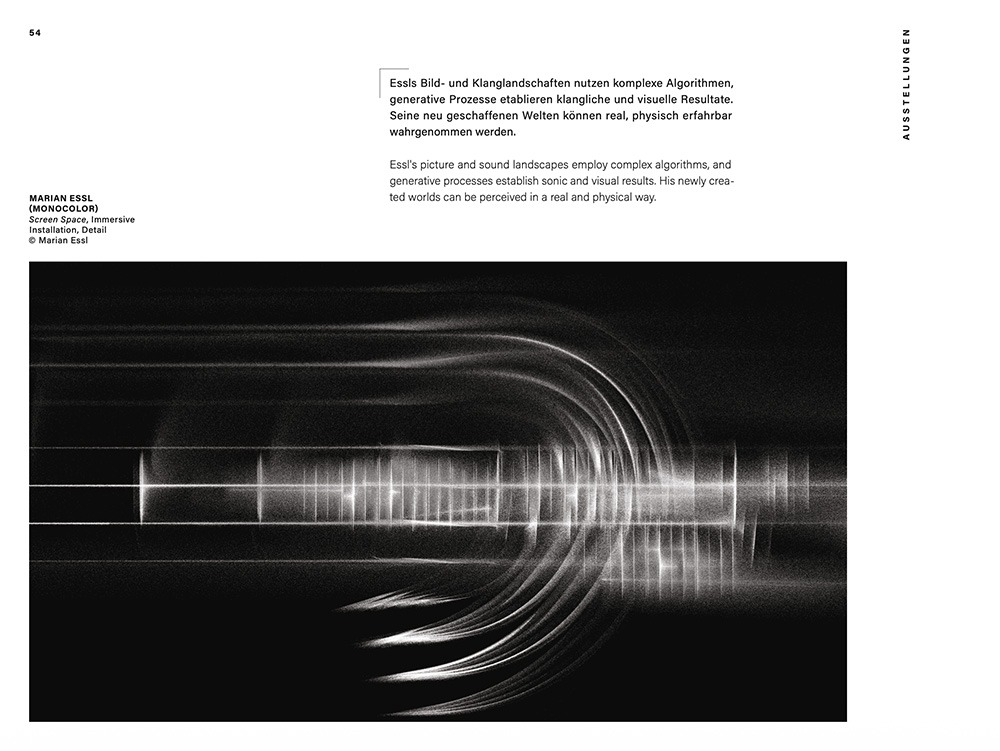
In the context of generative AI, this trail of the invisible and the hidden charts new territory. The ‘black box’ that conceals the logic of digital glitches also obscures the path leading to the erratic outputs of large language models – the so-called ‘hallucinations’.
Elena Peytchinska
EDITORIAL
Dear Readers!
Instability has become a defining condition of our time. Political systems are faltering, ecological balances are shifting, and technological developments are reshaping the ways we live together at an ever-increasing pace. What once appeared stable now reveals itself as fragile and contingent. Instability is no longer merely a symptom of crisis; increasingly, it has become the very condition through which reality is experienced.
This issue approaches the subject from a range of perspectives. At its heart are questions about the aesthetic, social, and cultural manifestations of instability. How do photography and media art respond to a world whose structures have become increasingly precarious? What kinds of images emerge when certainties dissolve and the limits of established systems come into view?
A key point of departure is the concept of Glitch Ecologies. Once understood as a technical error, the glitch is reconsidered here as a productive disruption – a moment in which hidden structures become visible and new relationships emerge. Several contributions explore the tensions between control and contingency, between technological order and its inevitable breakdown. Yet the glitch is not confined to digital systems.
Analog processes, too, are shaped by disruptions, displacements, and productive errors. Throughout this issue, instability emerges as an expansive condition that encompasses technical processes as much as memory, identity, and social experience. The review of Katherine Hubbard’s The Great Room, currently on view at the Vienna Secession, offers a poignant reflection on the ways identity and memory are transformed through the experience of dementia. Other contributions engage with artistic practices that respond to political upheaval, cultural shifts, and ecological fragility – from the Kyiv Biennial in Berlin and the Triennial of Photography Hamburg to Almost Paradise at the Museum Rietberg in Zurich, an exhibition that explores the entanglements of colonial history, cultural imagination, and notions of paradise.
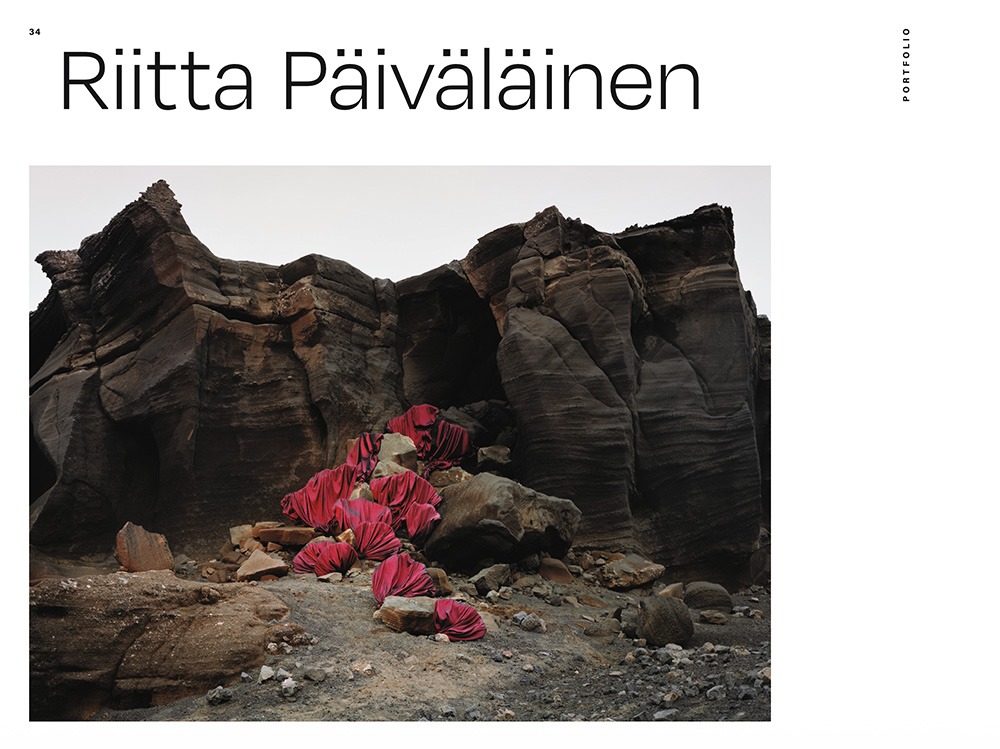
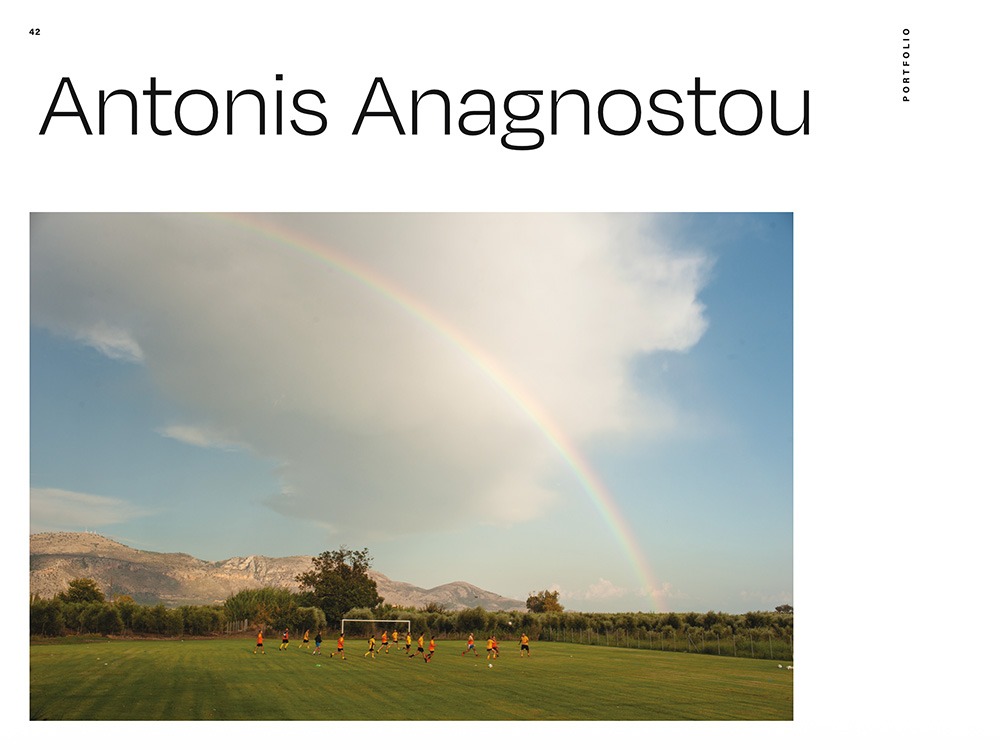
The two portfolios featured offer contrasting reflections on stability and instability. Riitta Päiväläinen’s works unfold as enigmatic fragments poised between landscape, memory, and absence. Garments appear as spectral stand-ins for human presence, while familiar environments slip into the realm of the uncanny. By contrast, Antonis Anagnostou’s series Playfields turns its attention to places that, in an increasingly fragmented world, seem to offer a rare sense of permanence. His football pitches, embedded in the arid landscapes of Greece, evoke spaces shaped by shared rituals, common rules, and collective experience – an association that resonates particularly strongly during the current FIFA World Cup.
Perhaps instability is less the opposite of order than a condition for change. The positions assembled here suggest that moments of rupture, displacement, and uncertainty can generate new ways of seeing. For it is often where certainties begin to waver that the present comes into focus.
Gudrun Zacharias
EIKON, JunE 2026
SPECIAL THANKS
All experts for their statements on photography
ART DIRECTION & DESIGN
Martin Hassler
TRANSLATION
Urška Longer